Back
Deep Tech Investment Strategy
Capital Factory — 2024
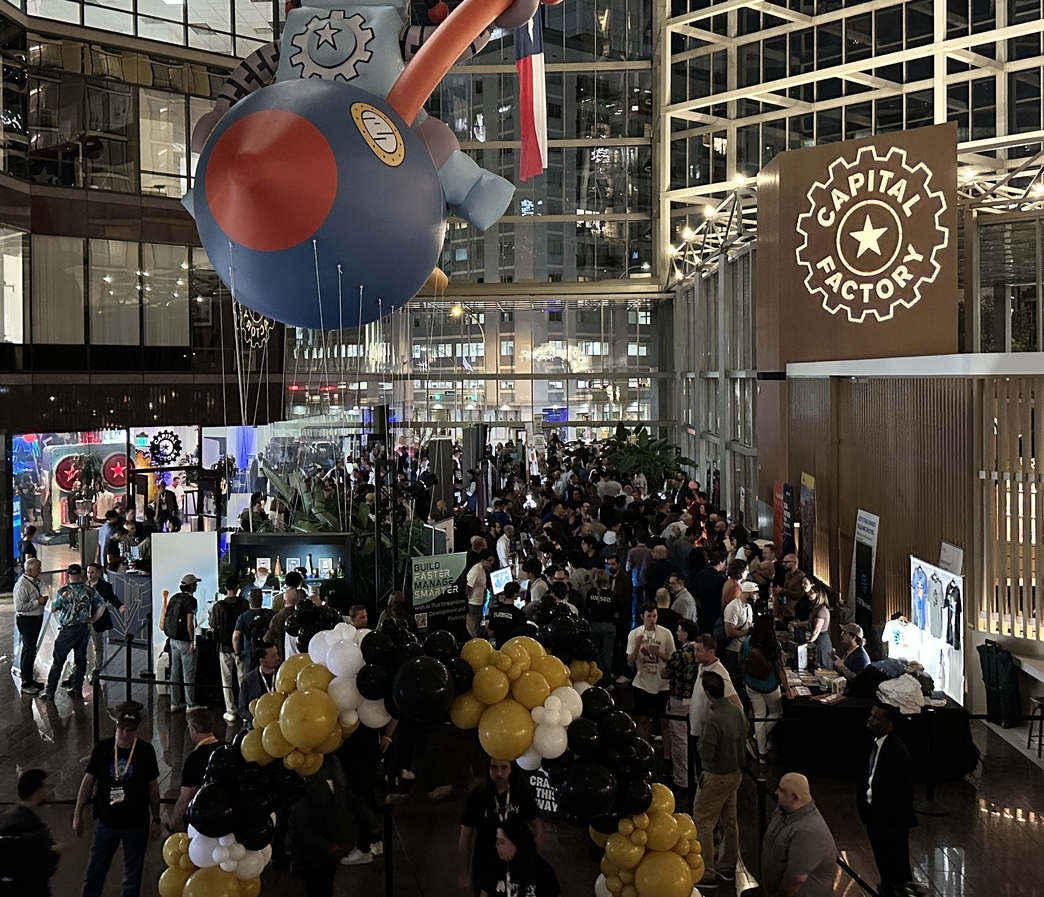
Capital Factory
My Role
Venture Capital Fellow — Deal Sourcing, Due Diligence, Financial Modeling, Founder Interviews, Investment Presentation
Team
Texas Fund Cohort
Bryan Chambers — Lead Instructor, Co-Founder at Capital Factory
Tamara Marshall — Lead Coordinator, CEO of Manta Systems
Timeline
4 Months — Final investment recommendation defended December 2024
Overview
Served as a Venture Capital Fellow for Capital Factory's Texas Fund, the most active early-stage VC in Texas. Over four months, I screened 8+ deep-tech startups through a rigorous due diligence process, wrote deal memos, interviewed founders, and built financial models.

From a pipeline of companies spanning defense tech, agritech, medtech, consumer health, sports analytics, and advanced materials, our team narrowed to two finalists — DexMat and Paradromics — and successfully pitched investments of $100K in DexMat and $60K in Paradromics directly to Capital Factory.
HIGHLIGHTS
Key numbers at a glance.
8+ startups screened across defense, medtech, materials science, agritech, consumer health, and sports analytics.
$160K total invested — $100K in DexMat and $60K in Paradromics across two investment recommendations.
CONTEXT
Learning to think like an investor.
The Texas Fund.
The Texas Fund is Capital Factory's venture fund focused on co-investing in deep-tech startups with dual-use (commercial + defense) potential and a 10x return profile. Capital Factory is the most active early-stage VC in Texas.
Texas Fund
1.0 The Texas Fund — Capital Factory's venture fund for deep-tech startups.
IMAGE
What we covered.
The fellowship was structured as a masterclass in venture capital mechanics under Bryan Chambers, Co-Founder at Capital Factory. The curriculum covered:

VC Fund Structure — The 2/20 model, J-curves, portfolio theory, LP/GP dynamics, and fund lifecycle economics.

Investing Thesis — Capital Factory's Texas Fund thesis: deep-tech, dual-use startups with enterprise software, national security, energy, infrastructure, defense, and healthcare applications.

Deal Structures & Valuation — SAFEs, convertible notes, priced equity rounds, cap tables, dilution modeling, and EBITDA multiples.

Due Diligence Framework — A 7-point framework covering Team Pedigree, Operational Moats, GovTech grants, market sizing, competitive landscape, exit analysis, and founder interviews.

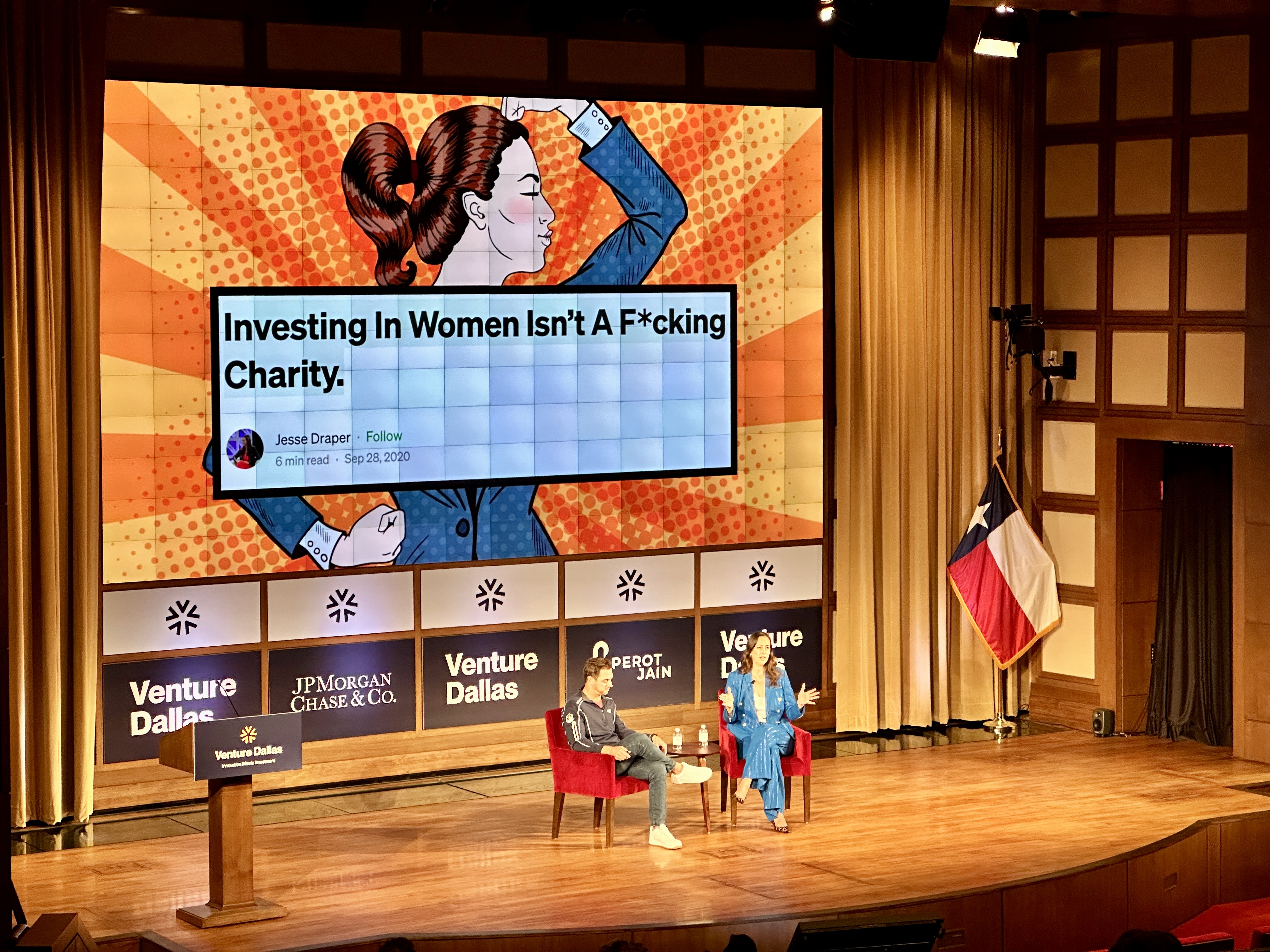
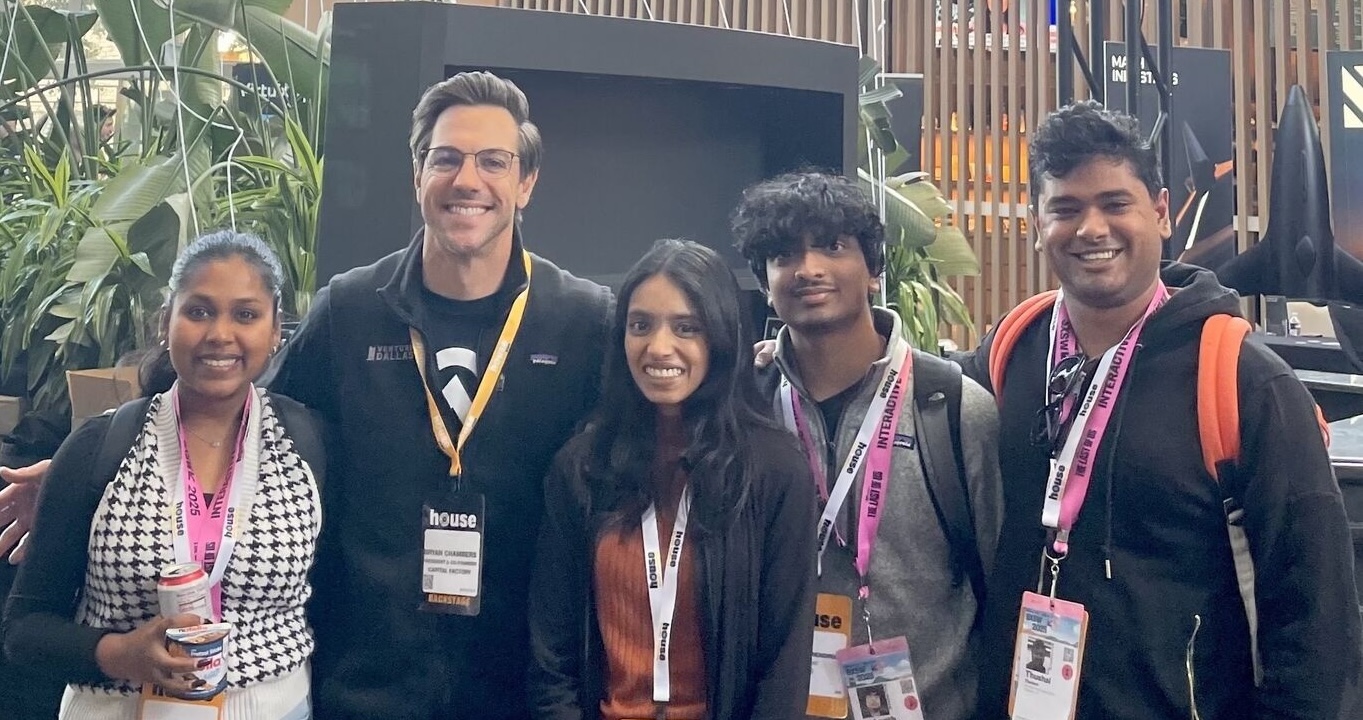
We also attended the Venture Dallas Conference and heard from portfolio founders.
Venture Dallas Conference
1.1 Venture Dallas Conference — hearing from portfolio founders and investors.
IMAGE
SPEAKERS
Learning from founders who’ve been in the arena.
Industry perspectives.
Beyond the core curriculum, we heard directly from founders building venture-backed companies — operators who had navigated fundraising, product-market fit, and exits firsthand. Their sessions grounded the theoretical frameworks in real-world experience.
Alex Treece.
Co-Founder & CEO, Stablecore — Former UTD Professor

Alex Treece is a repeat founder and one of the pioneering voices in crypto infrastructure. He co-founded Zabo, a crypto data aggregation platform often called “the Plaid of crypto,” which was acquired by Coinbase in 2021. At Coinbase, he led product across the Wallet developer platform and launched Quests, one of Wallet’s core monetization platforms.

He now leads Stablecore, a digital asset banking infrastructure company that raised a $20M Series A led by Norwest with participation from Coinbase Ventures.
Alex Treece
2.0 Alex Treece — Co-Founder & CEO of Stablecore, former Zabo founder (acquired by Coinbase).
IMAGE
Omeed Shams.
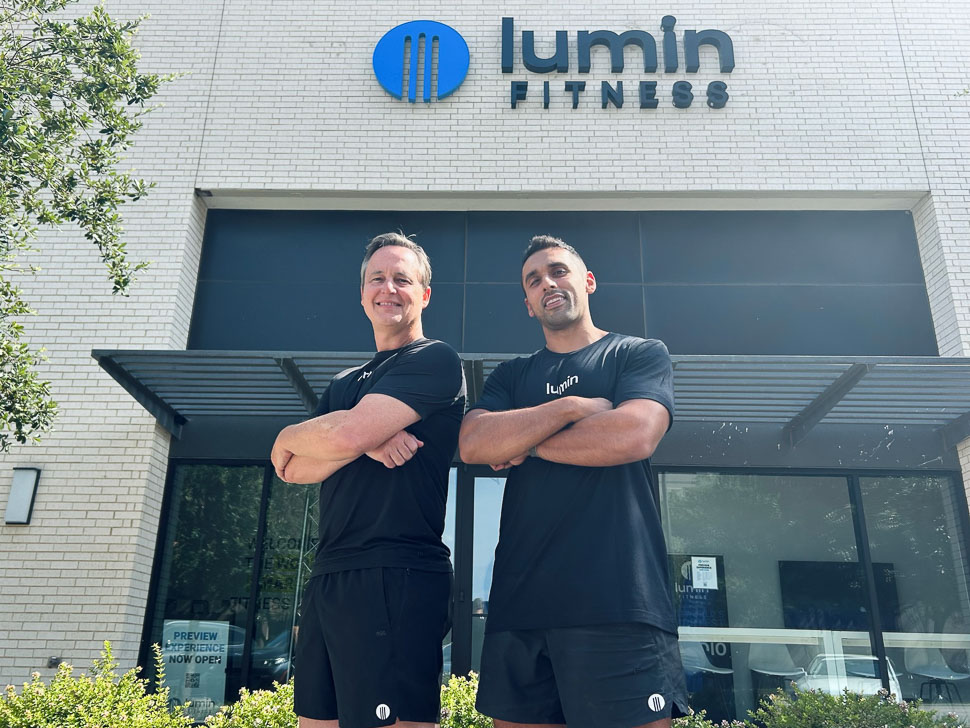
Co-Founder & CEO, Lumin Fitness — UTD Alum

Omeed Shams is a UTD Jindal School alum (M.S. Innovation & Entrepreneurship) who has been building companies since his student days. He previously founded Kwest, an augmented reality mobile app for interactive guided tours, and was selected for the 2018 Future Founders National Fellowship, a recognition of the top young entrepreneurs in the country.

He now leads Lumin Fitness, billed as “The World’s Smartest Fitness Studio.” Co-founded with Brandon Bean (former CEO of Gold’s Gym), Lumin combines AI, motion tracking, and immersive LED environments to deliver personalized group training at scale.
Omeed Shams
2.1 Omeed Shams — Co-Founder & CEO of Lumin Fitness.
IMAGE
THE CHALLENGE
Finding needles in haystacks.
Navigating real constraints.
Operating as venture capital fellows within a real fund meant applying institutional rigor while learning the craft in real time.
Thesis Alignment. Every company had to fit the Capital Factory Texas Fund thesis — deep-tech, dual-use, 10x return potential. Most deals failed this filter.
Stage Sensitivity. Capital Factory follows, not leads. We needed deals with existing lead investors and validated traction — ruling out most pre-revenue startups.
Valuation Discipline. Even promising companies were passed on when valuations were too aggressive for the fund's return profile.
Technical Depth. Deep-tech due diligence required validating scientific claims — from carbon nanotube material properties to brain-computer interface electrode durability.
THE CHALLENGE
Screen 8+ deep-tech startups through rigorous due diligence and identify the highest-conviction investment opportunity for Capital Factory's Texas Fund — with real capital on the line.
DEAL FLOW
Separating signal from noise.
The full pipeline.
Over the fellowship, we evaluated 8+ companies across defense tech, medtech, agritech, consumer health, materials science, and sports analytics. Each went through preliminary screening, deal memo creation, and team debate before a pass/invest decision.

Here's the full pipeline and why each company was passed on or advanced:
Deal flow pipeline
3.0 Deal flow pipeline — screening 8+ startups across sectors.
IMAGE
Agritech — Equipment Monitoring.
Thermal imaging and sensors for mechanical health monitoring of farming equipment. Seeking $500K for 10% at a $5M valuation.

Why it was passed: Not a US entity, extremely early stage with no revenue, would require leading the investment, and faced competition from incumbent solutions. Weak problem justification and most expensive option in the market.
Medtech — Spinal Cord Stimulation.
Spinal cord stimulation leads using thin-film electrodes on proprietary softening polymers.

Why it was passed: Compelling technology but pre-revenue with an extended FDA clearance timeline. Strong UTD connection but the regulatory risk and long path to commercialization made it too early for the fund.
Defense Tech — Autonomous UAV Manufacturing.
Expeditionary manufacturing of multimission UAVs using 3D printing and robotic assembly. Backed by a major defense prime. Series A at $275M post-money valuation.

Why it was passed: Impressive defense traction and contracts, but the $275M post-money valuation was too aggressive for the fund's return profile. High dilution risk and heavy dependency on government contracts.
Sports Analytics — AI-Powered Coaching.
AI-powered sports analytics platform with $22K ARR within 10 weeks of launch. Seeking $750K pre-seed/seed.

Why it was passed: Too early stage, would require leading the round, and the core problem was already solved by an incumbent used by 98% of US high schools. No defensible competitive advantage — nothing stopping the market leader from adding similar AI features.
Consumer Health — Smart Nutrition Tracking.
AI-powered utensils to detect and measure eating habits. Seeking $250K SAFE.

Why it was passed: Still on 4th prototype with no revenue. Untested product-market fit, practical limitations (can't track foods eaten by hand), and limited differentiation against established nutrition and wellness platforms. Only verbal funding commitments.
Biotech — Virtual Drug Testing.
"Digital Human" software platform for virtual drug testing using biological models. Founded by a researcher with 61,000+ academic citations. Seeking $5M seed with a projected 18-month runway.

Why it was passed: Innovative concept but far too early — no revenue, speculative projections, extended timeline to commercialization, and lacked detailed competitive analysis. The science was strong, but the business case was premature.
Aerospace — Autonomous Microfactories.
Autonomous deployable microfactories using robots to 3D print and assemble aerospace structures. $15–20M seed round at ~$165M pre-money.

Why it was passed: Disruptive WAAM technology with strong aerospace validation, but the valuation was too high, capital requirements were intense, and government sales cycles introduced significant risk. Considered for investment but ultimately passed.
FINAL PICKS
Two high-conviction bets.
The finalists.
From the full pipeline, two companies survived every filter: thesis alignment, stage fit, valuation discipline, technical validation, and founder quality. Both represented fundamentally different risk profiles with asymmetric upside.
DexMat — Advanced Materials.
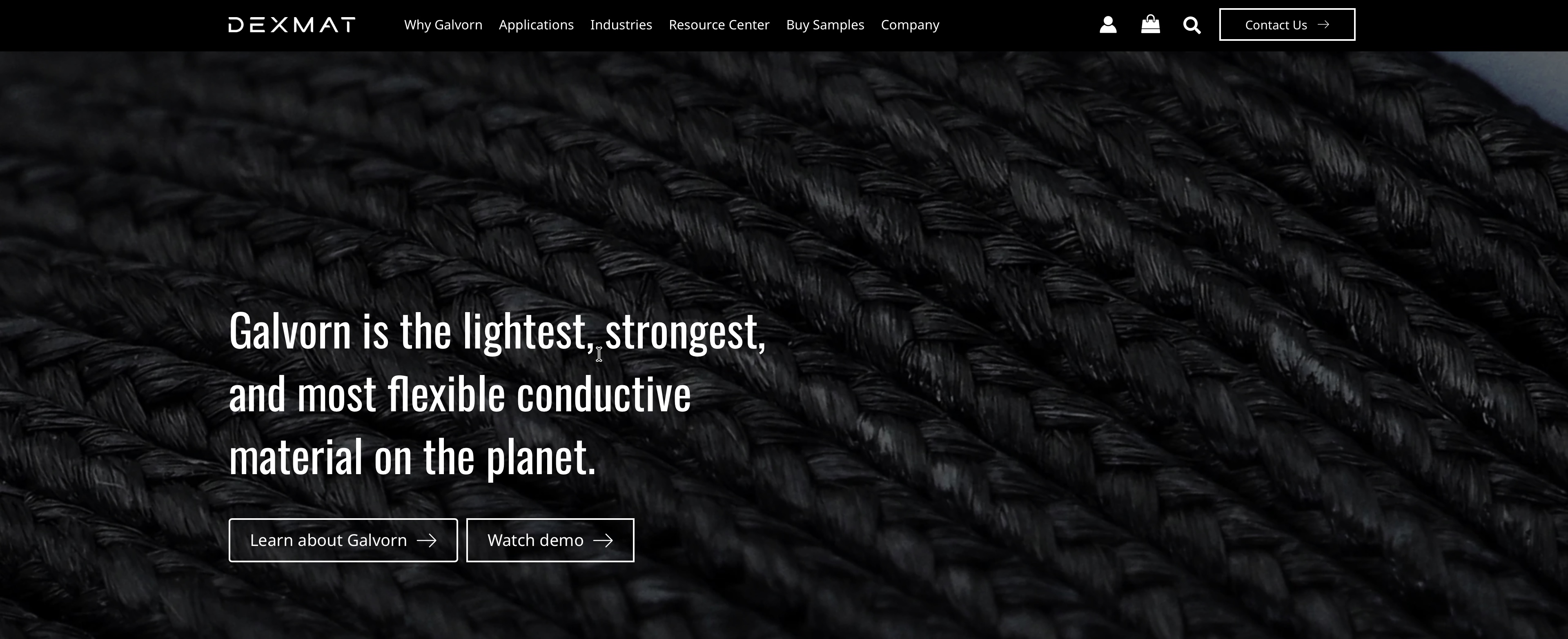
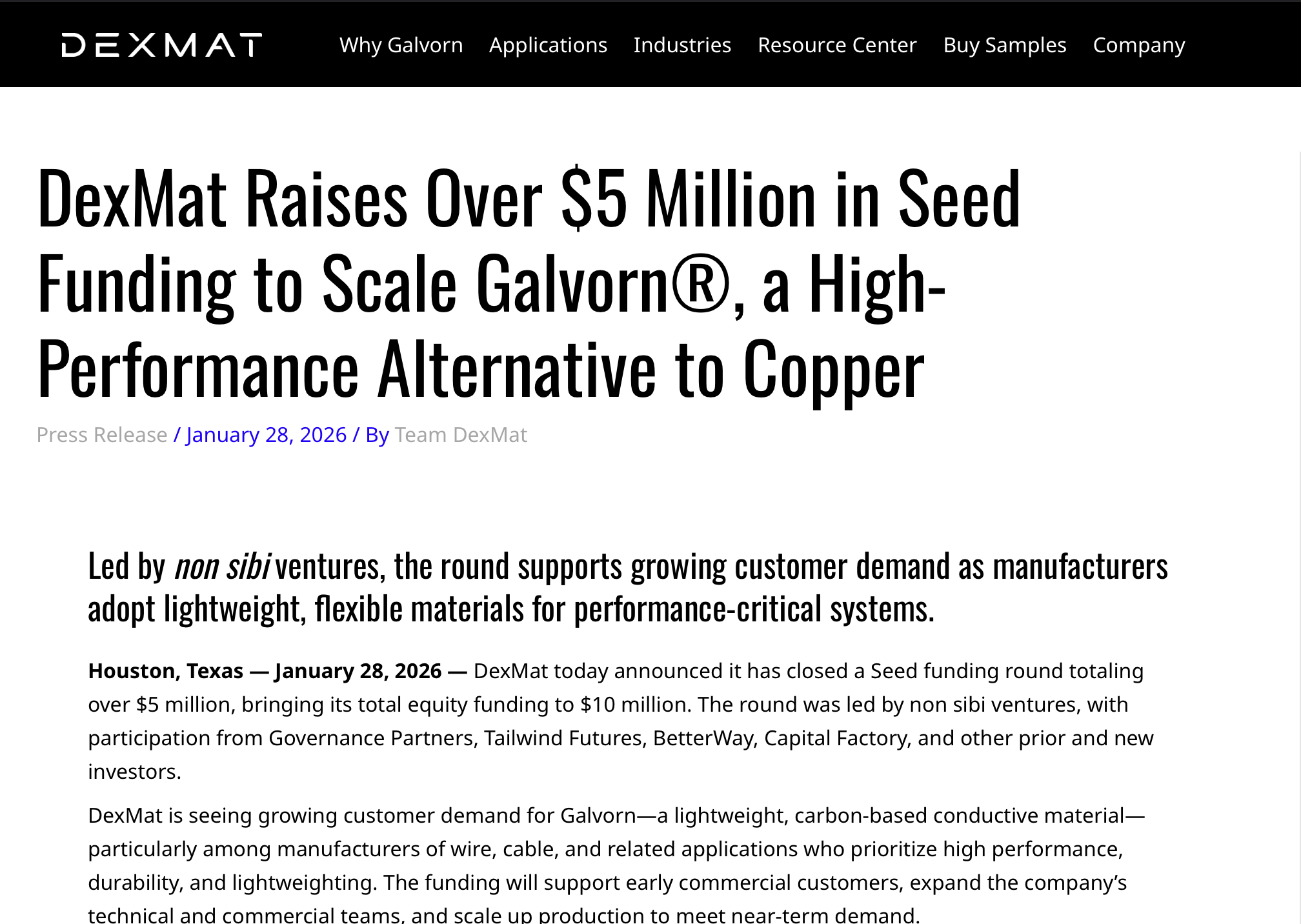
DexMat produces Galvorn, a carbon nanotube-based material that is 10x stronger than steel, half the weight of aluminum, and 100x the flex life of copper. Founded in 2019 out of Rice University by CEO Bryan Guido Hassin (five-time founder) and CTO Dmitri Tsentalovich, PhD.

DexMat had secured significant non-dilutive funding from the DOE, Air Force, and ARPA-E, with partnerships from Shell and Prysmian Group (world leader in wires and cables).

Galvorn's applications span power transmission, defense fabrics, sports composites, automotive, and aerospace — a $2.83T total addressable market with accelerating commercial traction.

Exit valuation analysis using EBITDA multiples from comparable companies projected 8x to 15x returns from the current valuation.
DexMat
4.0 DexMat — Galvorn carbon nanotube material.
IMAGE
Paradromics — Brain-Computer Interfaces.
Paradromics is building the highest-fidelity brain-computer interface for advanced medical applications. Their Connexus DDI system features 1,600+ durable platinum-iridium electrodes, a fully wireless infrared data link (100x faster than Neuralink's Bluetooth), and 10+ year electrode durability versus Neuralink's 2-year lifespan.

Founded in 2015 and based in Austin, TX, the company had secured FDA Breakthrough Device Designation with first-in-human trials planned for 2025.

The first market — restoring communication to people who have lost it — represents a significant TAM, with second-order markets in sensory, motor, and mental health applications expanding the opportunity dramatically. The dual-use thesis aligned perfectly with Capital Factory, given Paradromics' acceptance into the DoD's TAP program.

HIGH conviction recommendation with significant MOIC potential by 2035, contingent on successful clinical trials and regulatory clearance.
Paradromics
4.1 Paradromics — brain-computer interface technology.
IMAGE
INVESTMENT
Making the ask.
The final recommendation.
I co-presented the investment thesis directly to Capital Factory's leadership. The presentation covered dual-use thesis fit, market opportunity, exit valuation analysis, pros and cons, and a clear ask.

The ask: $100K into DexMat and $60K into Paradromics.

The presentation included a detailed dilution analysis across Seed+, Series A, and Series B rounds, Porter's Five Forces analysis, complementary products analysis, and advisor validation from industry experts.
DexMat investment pitch
5.0 DexMat — Galvorn carbon nanotube material.
IMAGE
Why DexMat over Paradromics.
Both companies received HIGH conviction recommendations. DexMat was selected as the primary investment for several reasons:

Nearer-term commercialization. DexMat had accelerating revenue and active commercial partnerships, while Paradromics was still pre-clinical.

Lower regulatory risk. Galvorn doesn't require FDA approval for most applications, while Paradromics faces years of clinical trials.

Valuation fit. The risk-adjusted return profile was more favorable for the fund.

Immediate thesis alignment. DexMat's dual-use applications mapped directly onto Capital Factory's investing thesis with near-term revenue potential.
Texas Fund Cohort
5.1 Texas Fund Cohort — Capital Factory.
IMAGE
RETROSPECTIVE
What I took away.
01
Killing deals is the real skill
The most valuable discipline wasn't finding winners — it was having the conviction to pass on companies with compelling stories but fatal flaws. Six of eight companies were killed for specific, defensible reasons.
02
Thesis fit is non-negotiable
No matter how exciting a company, if it doesn't fit the fund's thesis — stage, geography, sector, return profile — it's a pass. This filter eliminated more companies than any technical diligence.
03
Deep tech requires deep diligence
Validating carbon nanotube material properties and BCI electrode durability required going beyond financial models. Speaking to advisors, physicists, and domain experts was essential to building conviction.
04
Real capital sharpens thinking
Knowing that real capital — $160K across two investments — was on the line changed everything. Every claim in every pitch deck was scrutinized, every assumption stress-tested, and every recommendation backed by data.
Next project: