Back
Gen Z Health Engagement Strategy
Blue Cross Blue Shield — 2025
My Role
Product Manager — Conceptual Design, Product Strategy, Road Mapping, User Flows, Interviewing, Rapid Prototyping
Team
UTD Team
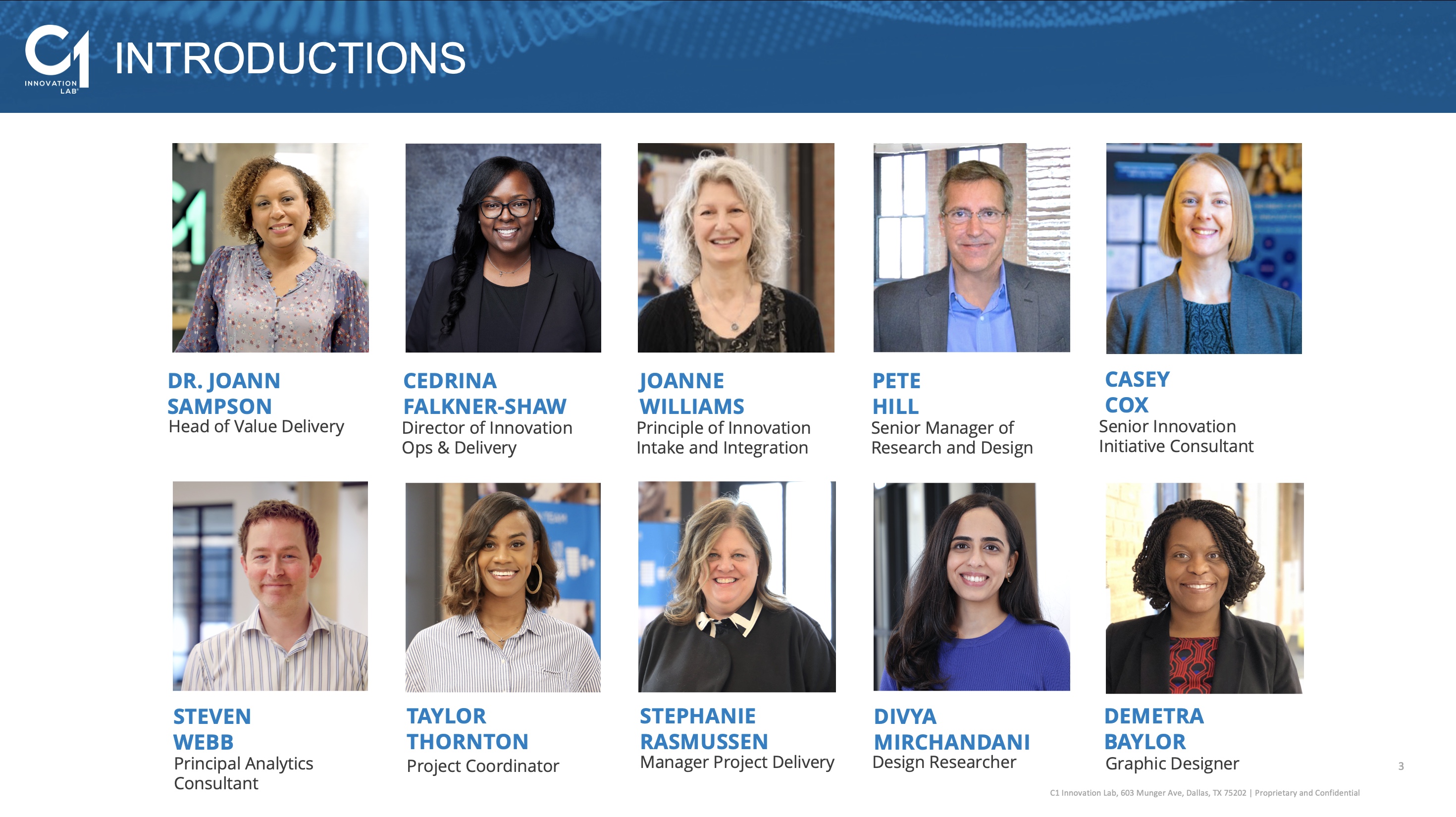
C1 Innovation Lab Leadership
Timeline
4 Months — Final presentation delivered May 6th to C1 Innovation Lab
Overview
Tasked by the C1 Innovation Lab in Dallas, I led the research and strategy effort to understand why Gen Z students were disengaged from health insurance. Over four months, I funneled a vague problem statement into a targeted root cause analysis, identifying “Health Literacy” and “Service Anxiety” as the core barriers.

I conducted primary research with 36 students (24 domestic, 12 international), overcame legal data restrictions by pivoting to public research methods, and delivered a three-pronged ecosystem strategy — spanning digital, physical, and behavioral interventions — directly to C1 Innovation Lab leadership.
HIGHLIGHTS
Key deliverables at a glance.
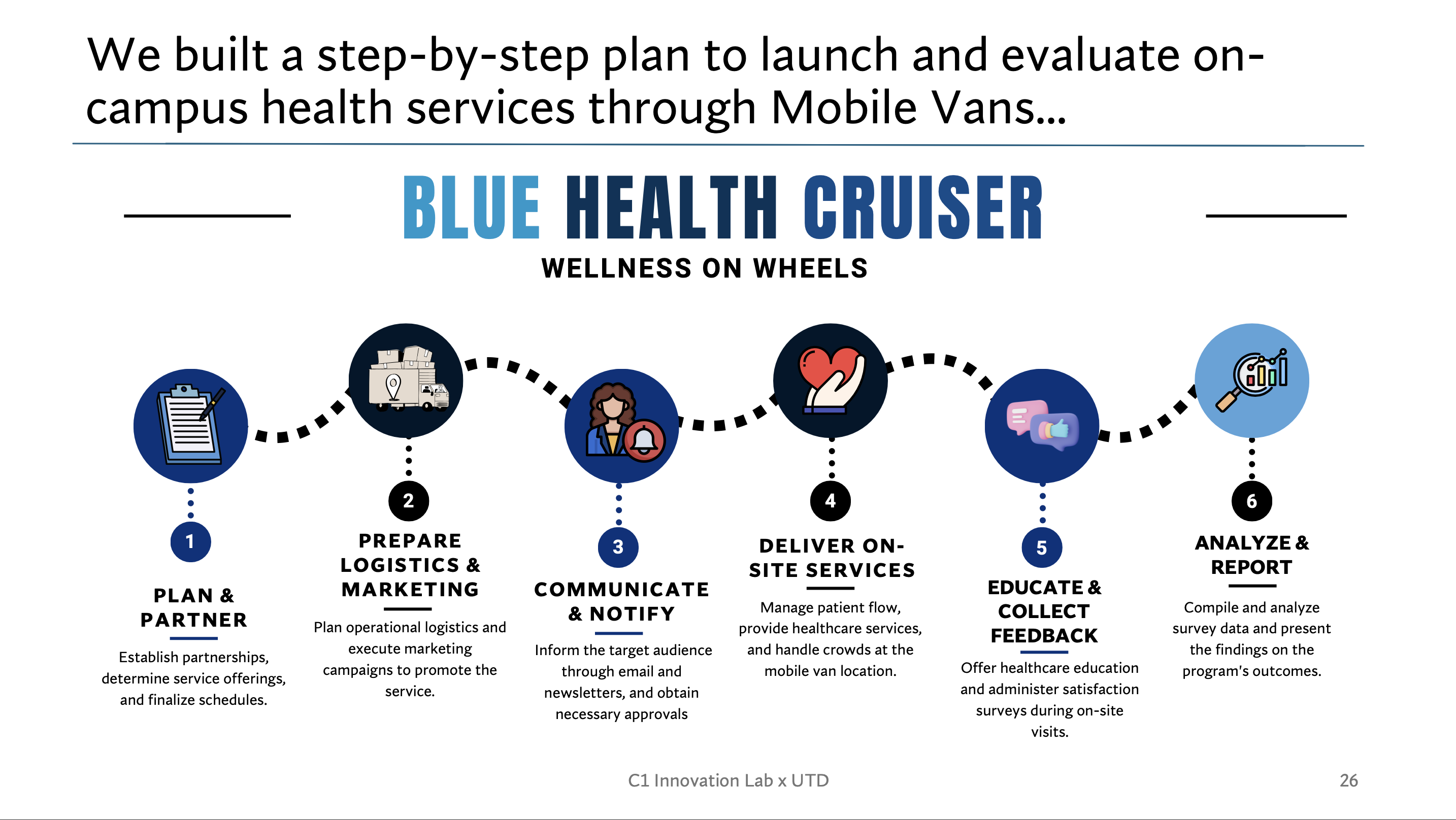
0.1 Blue Health Cruiser — mobile health bus concept for campus visibility.
IMAGE
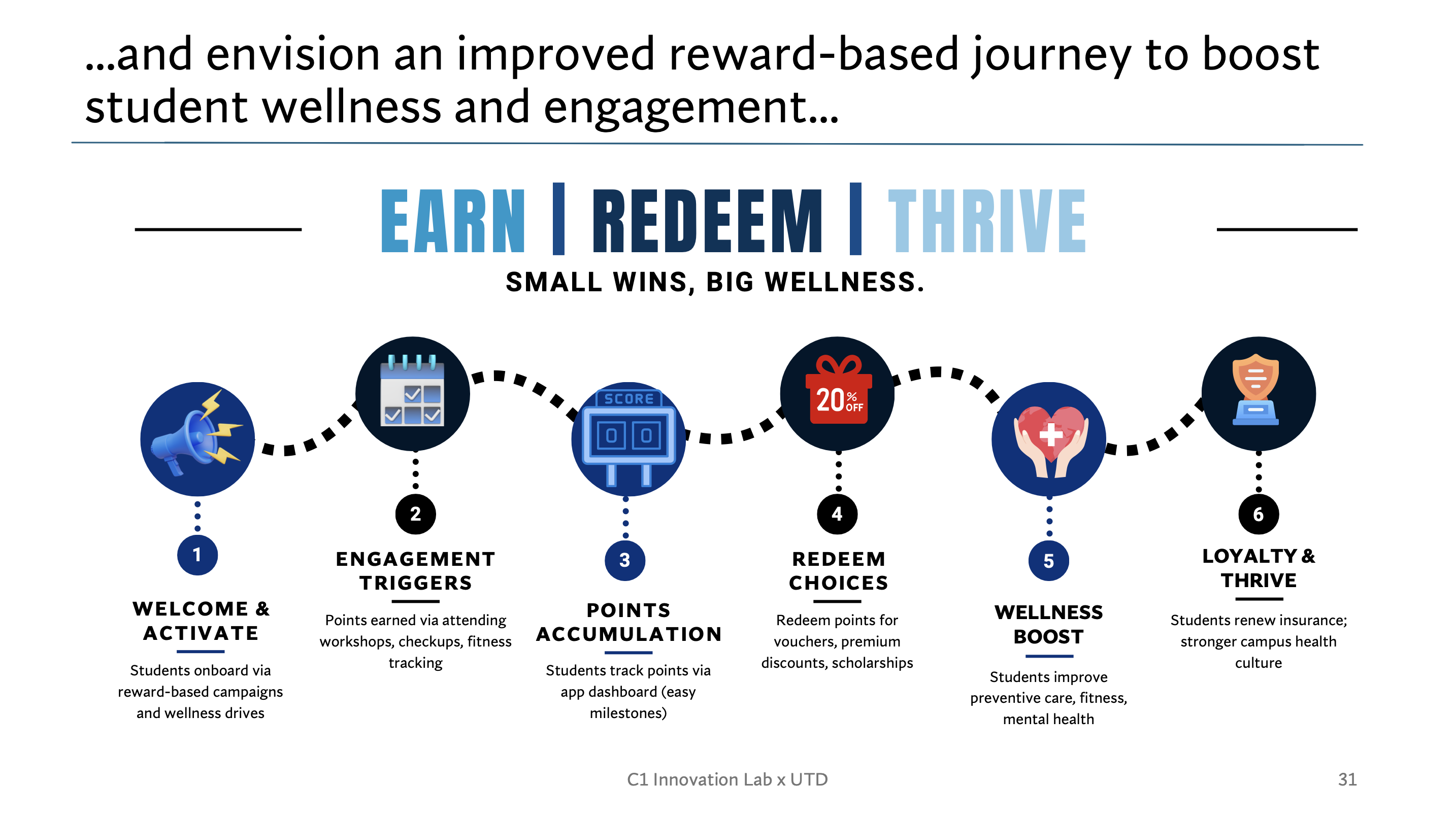
0.2 Gamified Rewards Platform to incentivize preventative health behaviors.
IMAGE
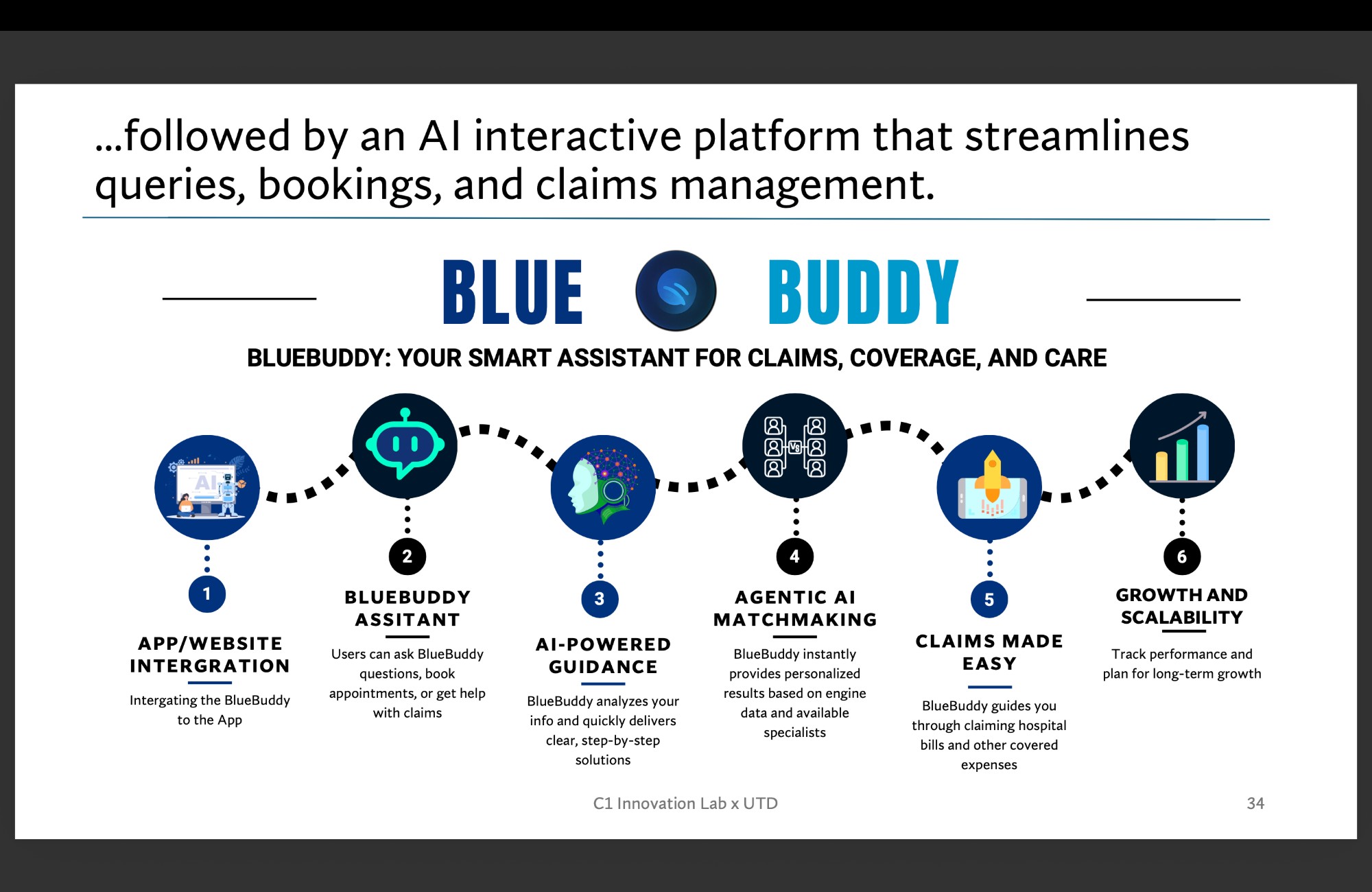
0.3 “BlueBuddy” — RAG-based AI Chatbot prototype for instant policy answers.
IMAGE
CONTEXT
A vague prompt, a massive disconnect.
An abstract, unfocused directive.
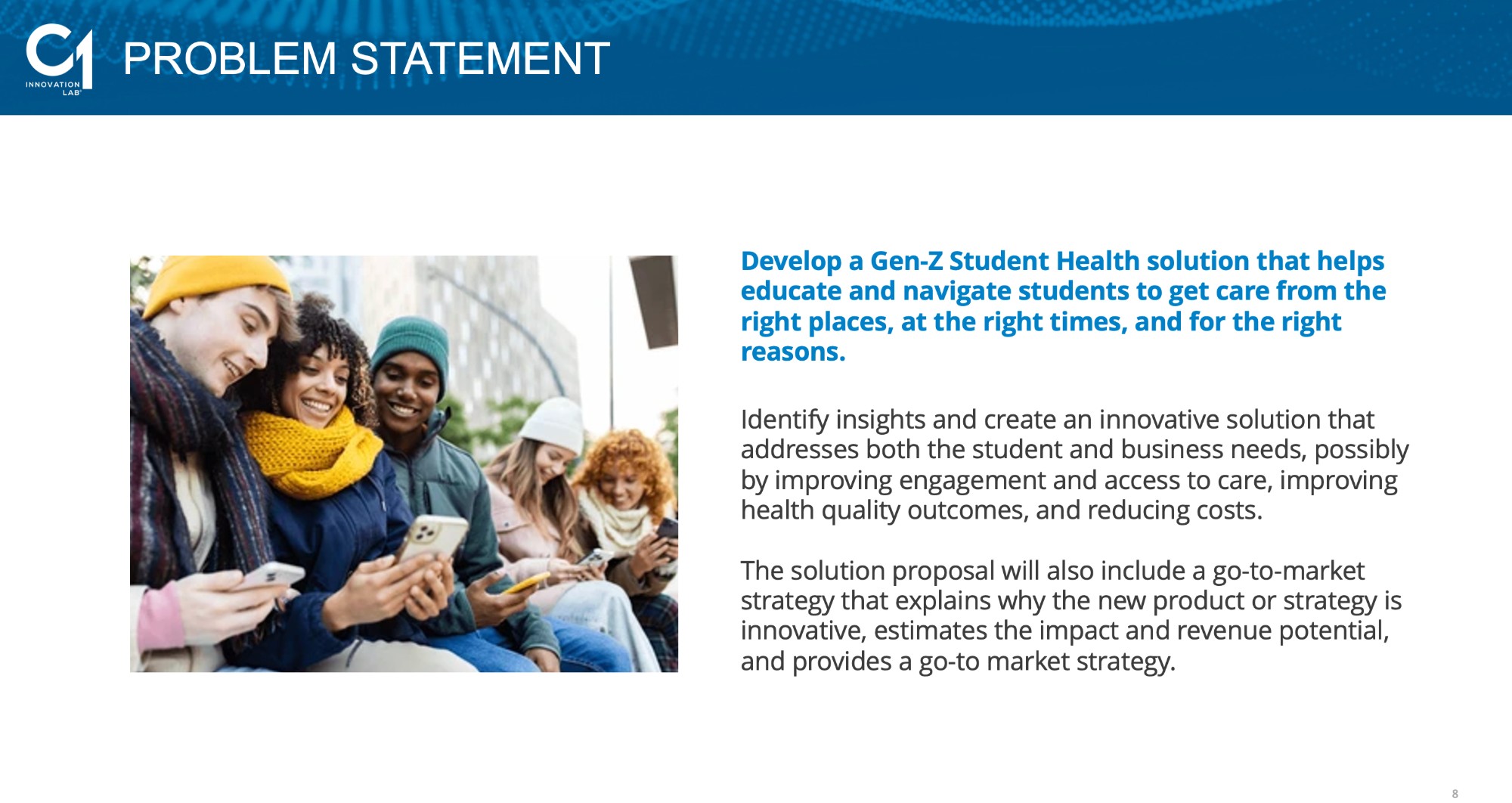
The initial goal was simply “getting Gen-Z students more informed” — an abstract, unfocused directive. Meanwhile, the real issue was far more layered: students didn’t know what a “deductible” was, they experienced anxiety when calling support lines, and they ignored digital outreach entirely.
1.0 C1 Problem Statement.
IMAGE
THE PROBLEM
A pile-up of constraints.
Navigating real barriers.
Working within a corporate innovation lab meant navigating real compliance barriers while maintaining the agility to deliver an actionable strategy in four months.

The team had zero access to internal BCBS data — which came with its own set of unique constraints and challenges:
Legal & Data Access Barriers. — No license agreement meant zero access to internal BCBS data. Required a full pivot to public research methods.
Scope Ambiguity. The initial problem statement was vague, requiring extensive stakeholder interrogation to refine into actionable research.
Limited Research Resources. No financial support or university incentives to compensate research participants.
Service Friction. Gen Z users face “phone anxiety,” avoiding support calls that require intrusive validation questions and long wait times.
THE CHALLENGE
Take an abstract directive about “Gen Z engagement” and funnel it into a specific, actionable strategy — while operating without access to proprietary data, financial resources, or structured organizational support.
North Star design principles:
01
Define Before Solving
Resist “solution-jumping” by rigorously interrogating the problem statement first.
02
User-Centered Truth
Speak directly to users rather than guessing. Find the disconnect.
03
Viability Over Creativity
Every proposal evaluated against Monetary ROI, Scalability, and Time to Market.
RESEARCH
The backbone of the strategy.
Hands-on user discovery.
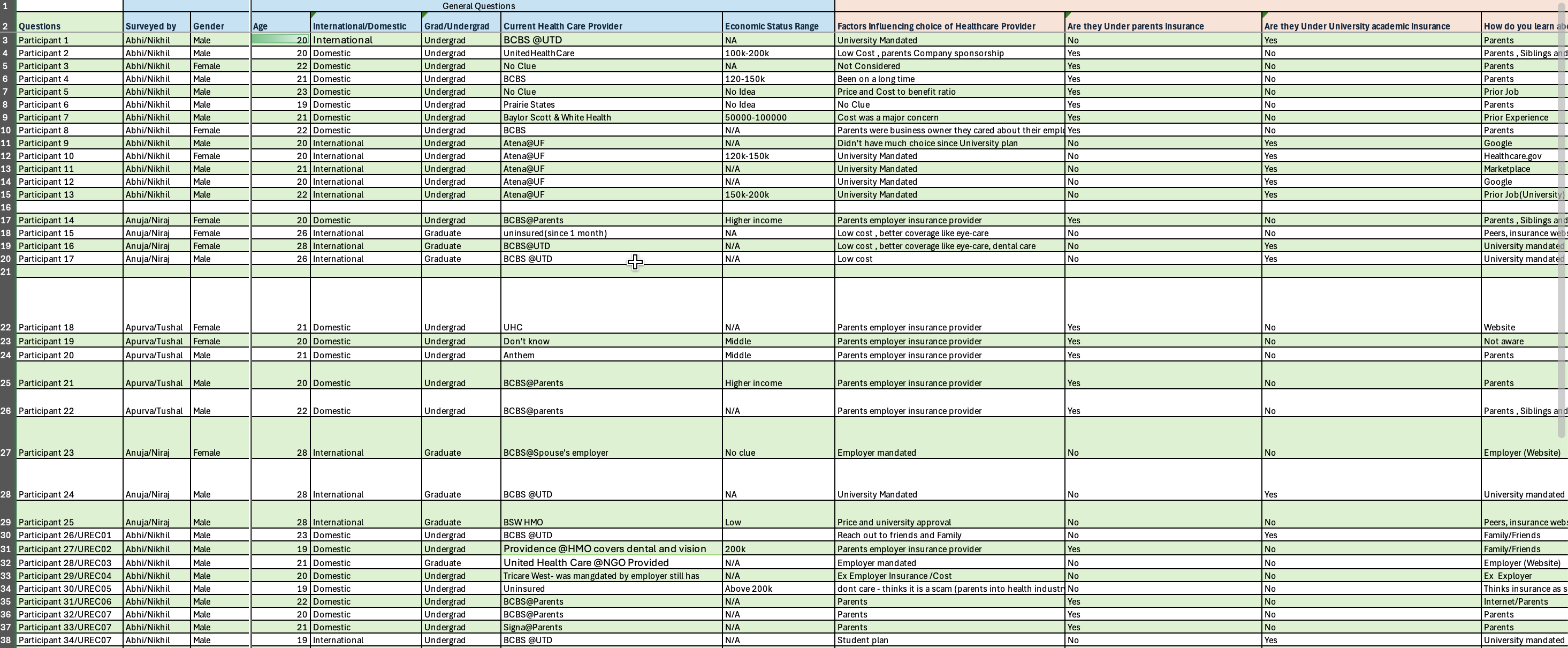
I interviewed 36 students — 24 domestic and 12 international — to understand market trends and real user behaviors. Speaking directly to users revealed distinct behavioral patterns that corporate data alone could never surface.
3.0 Primary research — 36 student interviews across cohorts.
IMAGE
Parental interrogation.
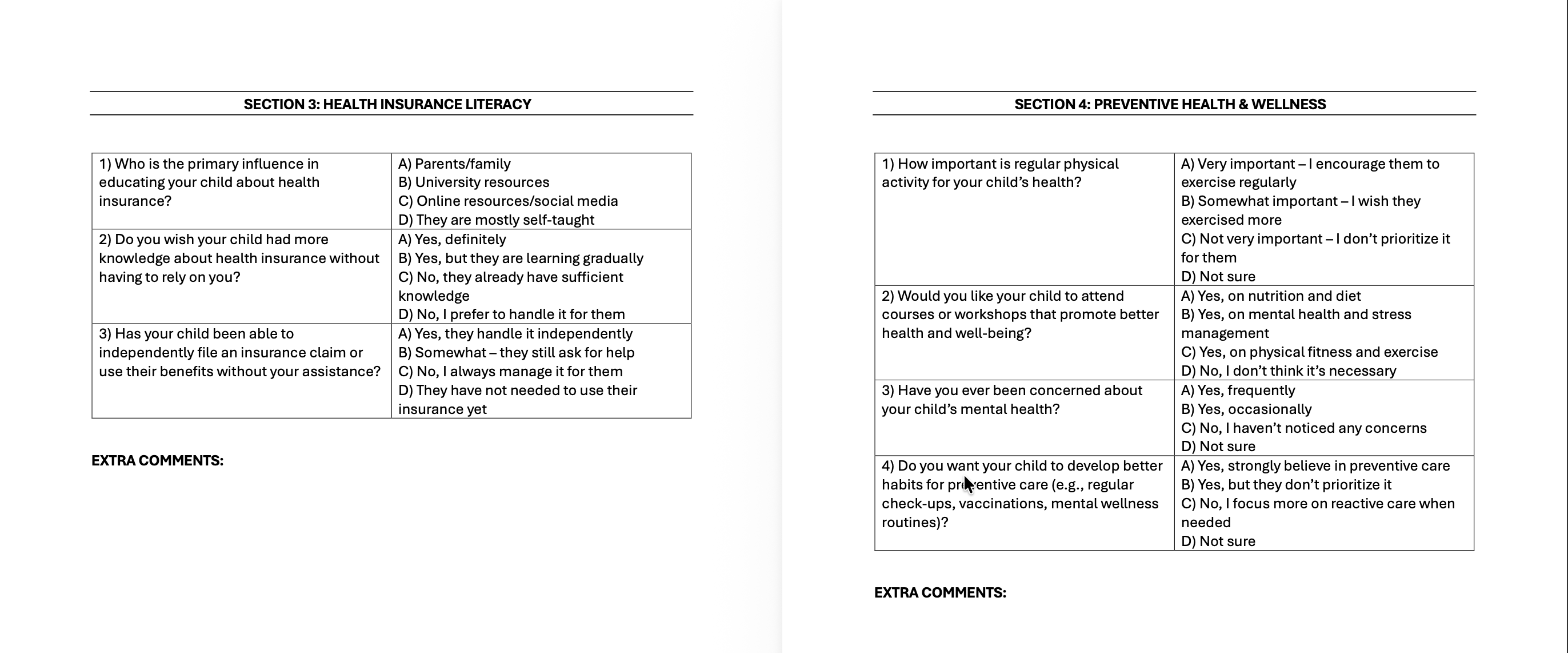
Parental interviews were designed to confirm our research observations — not surface symptoms — and revealed a clear disconnect between what insurers assume students know and what they actually understand.
3.1 Parental interrogation framework.
IMAGE
Distinct personas from real behavior.
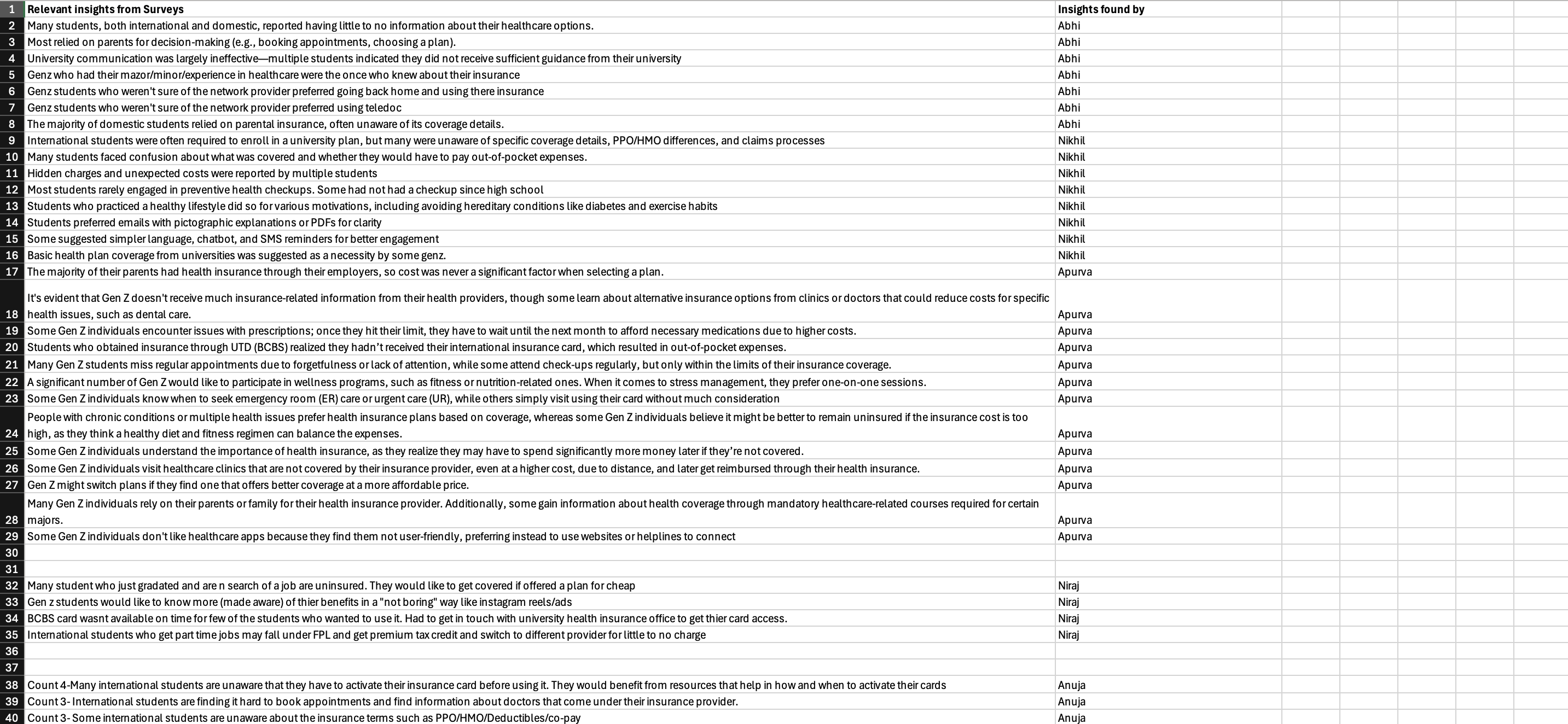
Rather than guessing what students wanted, direct interviews surfaced distinct behavioral archetypes that informed every strategic decision downstream.

Four key personas emerged: “The Hustling Student”, “Covered but Clueless”, “The Confused International” and “Uninsured Risk Taker” — each representing fundamentally different engagement barriers.

These personas drove every downstream decision in the strategy.
Research triangulation.
With no access to internal data, I mastered a three-pronged research approach: primary research through direct customer interviews, secondary analysis of publicly available industry reports, and tertiary validation through external connections and competitor analysis.
3.2 Three-pronged research triangulation methodology.
IMAGE
SOLUTION
A three-pronged ecosystem.
Physical, digital, and behavioral.
Each pillar was designed to address a distinct barrier in the Gen Z engagement pipeline, ensuring the strategy could reach students through multiple touchpoints simultaneously.
The AI Chatbot — Bypassing Phone Anxiety.
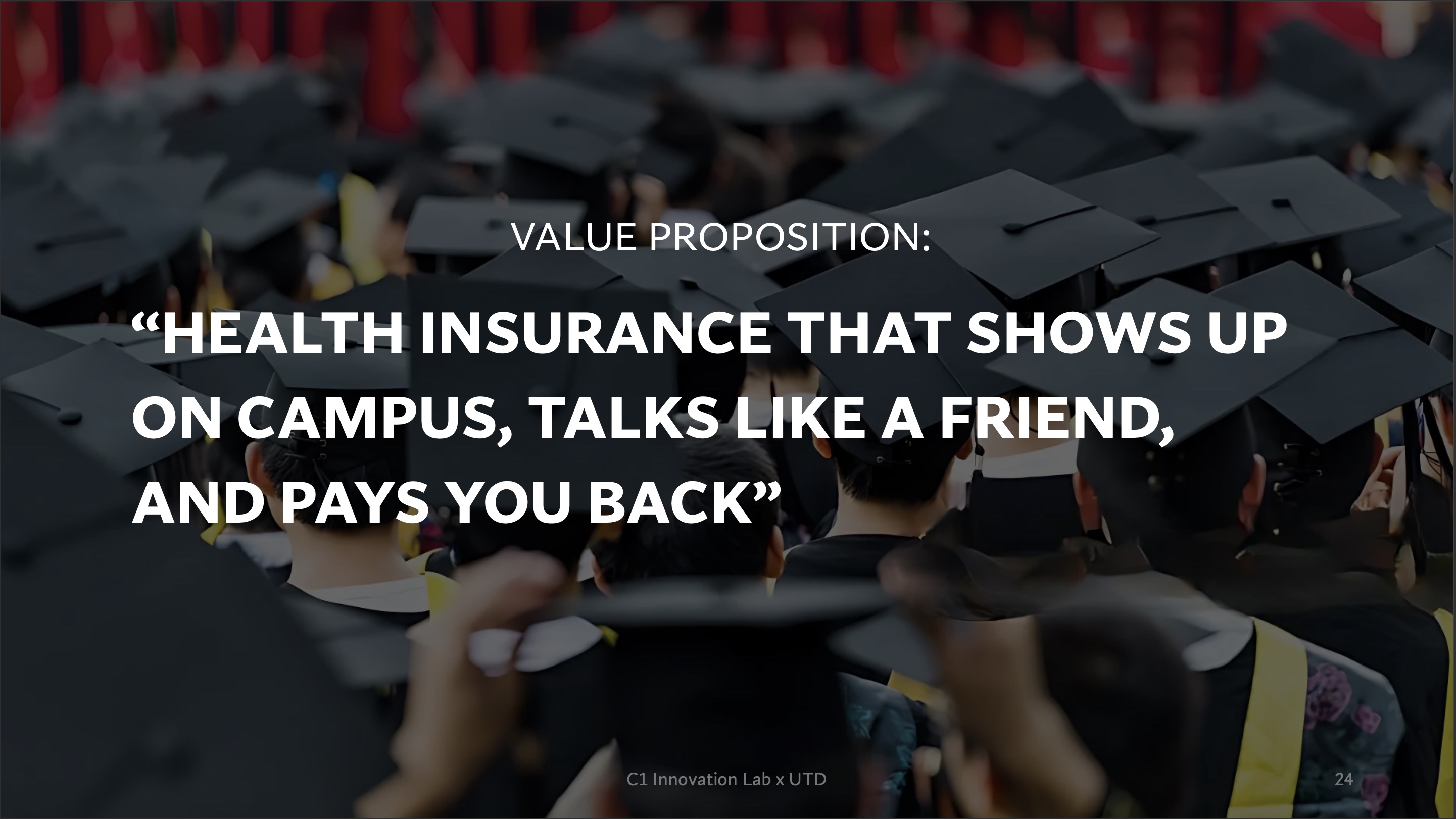
A RAG-based system that ingests dense policy documents for instant, plain-English answers. Students get coverage questions resolved in under 5 seconds — versus 45+ minutes navigating PDFs, sitting on hold, and waiting days for a callback just to book an appointment.
The Mobile Health Bus — Meeting Students Where They Are.
Majority of Gen-Z students interviewed skipped a routine checkup last year, and most will never seek out their insurer on their own. The Blue Health Cruiser brings preventive care and insurance education directly to campus, converting passive awareness into active engagement between classes.
Gamified Rewards — Incentivizing Healthy Behaviors.
Existing wellness perks suffer from low redemption and a forgettable points system. Students earn points for healthy behaviors — webinars, fitness goals, preventive visits — redeemable for premium cashback, vouchers, and scholarships up to $10,000. Insurers save when users choose preventive care over ER visits.
IMPACT
Measurable outcomes.
Quantified impact.
The strategy delivered measurable results across multiple dimensions.

Coverage answers in under 5 seconds — versus 45+ minutes navigating policy PDFs, sitting on hold, and waiting days for a callback just to book an appointment.

Bring preventive care directly to campus, targeting the 53% of Gen-Z students who skipped a routine checkup the previous year.

Turn healthy behavior into scholarship dollars and premium cashback, driving engagement across the student market.
5.0 Quantified impact and value proposition.
IMAGE
Research-driven results.
The three-pronged ecosystem was designed to address distinct barriers simultaneously. Each pillar — digital, physical, and behavioral — was evaluated against Monetary ROI, Scalability, and Time to Market, ensuring every proposal carried a clear business case.

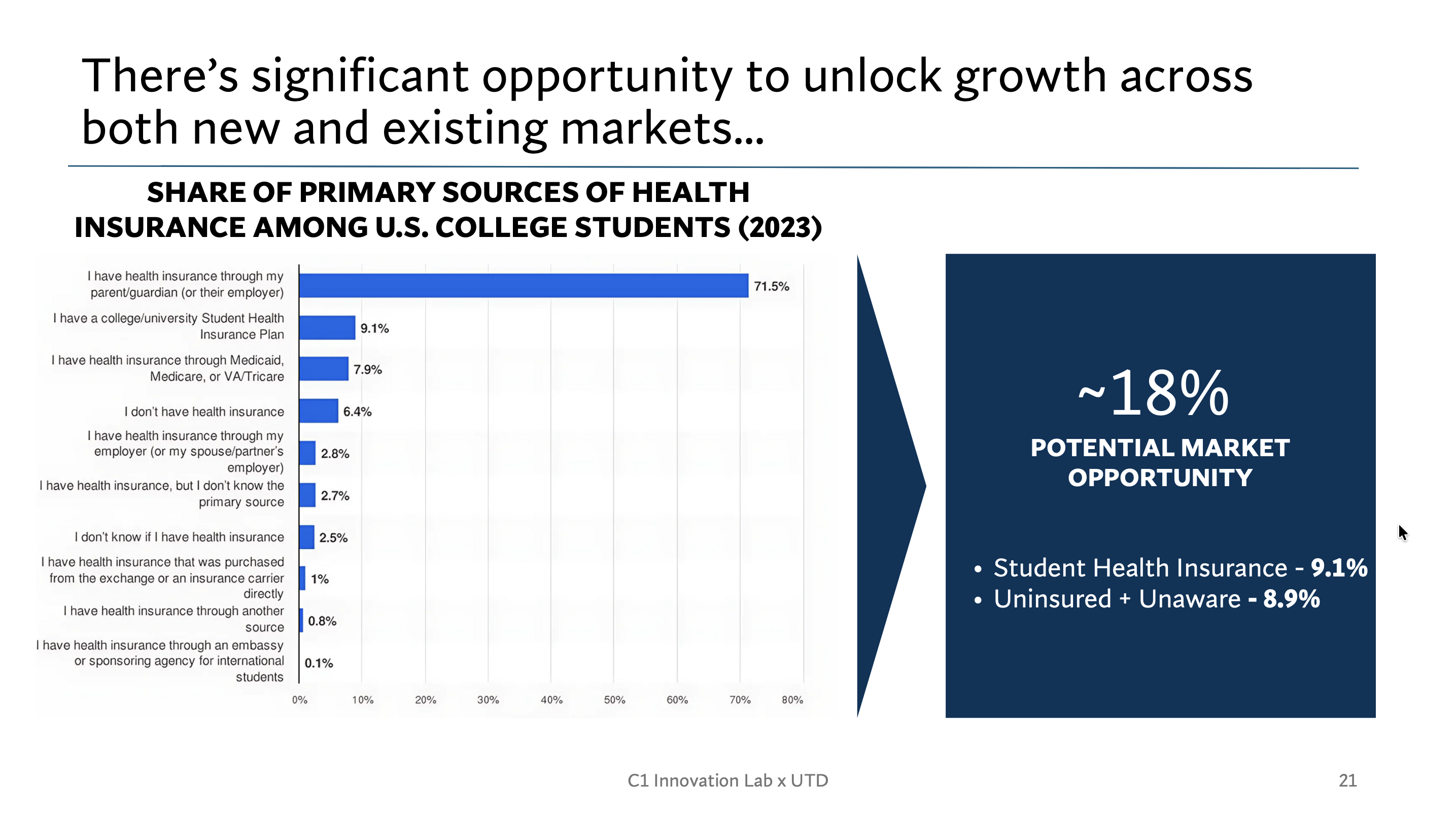
With market analysis revealing an ~18% untapped opportunity among college students, the solution positions BCBS to capture growth across both new and existing segments.
Research-driven results
5.1 Market opportunity and ecosystem viability.
IMAGE
RECOGNITION
Earning the stage.
Selected to present to C1 Innovation Lab leadership.
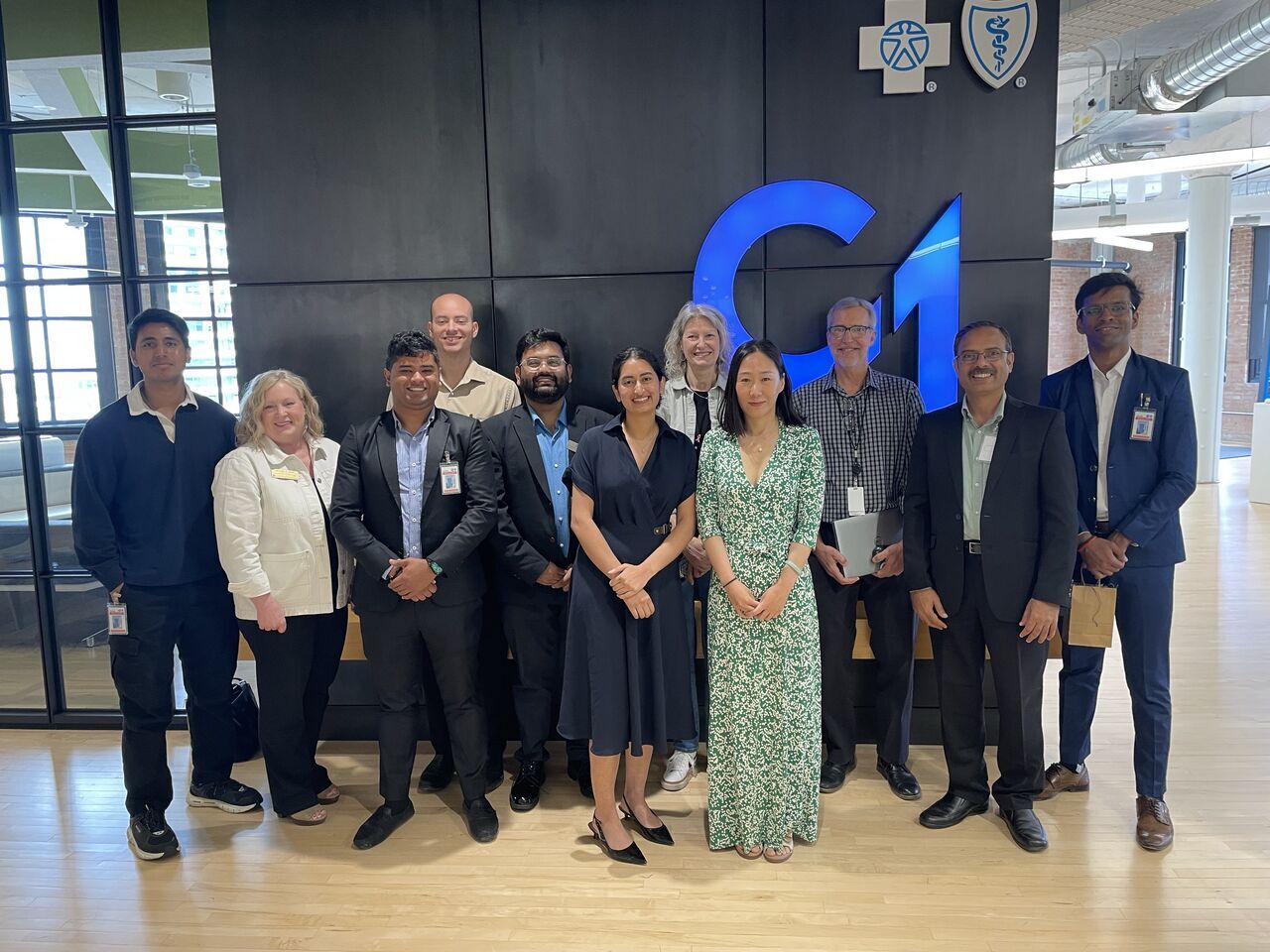
Selected as the only team to present the final Gen Z strategy directly to the C1 Innovation Lab Leadership Team — a privilege reserved for high-impact projects.
Live presentation to C1 Innovation Lab leadership
6.0 Final presentation — C1 Innovation Lab.
IMAGE
Leadership presentation
6.1 Leadership presentation day.
IMAGE
Building stakeholder confidence.
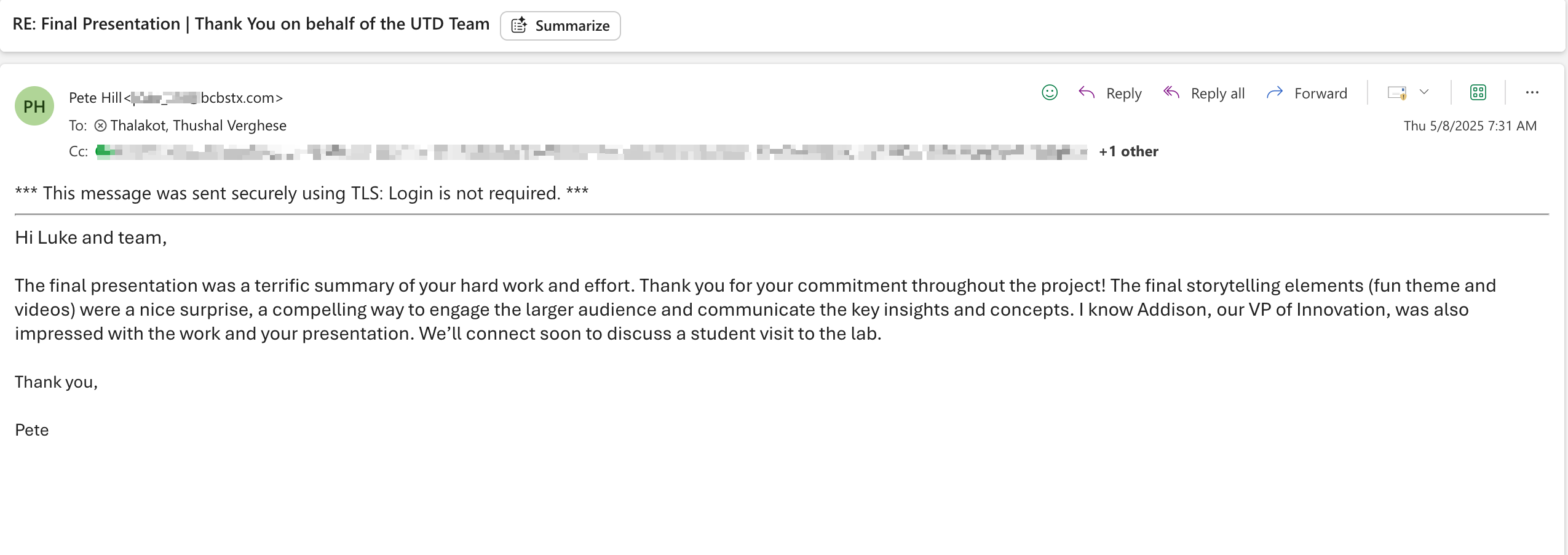
The viability-driven approach earned trust with leadership.
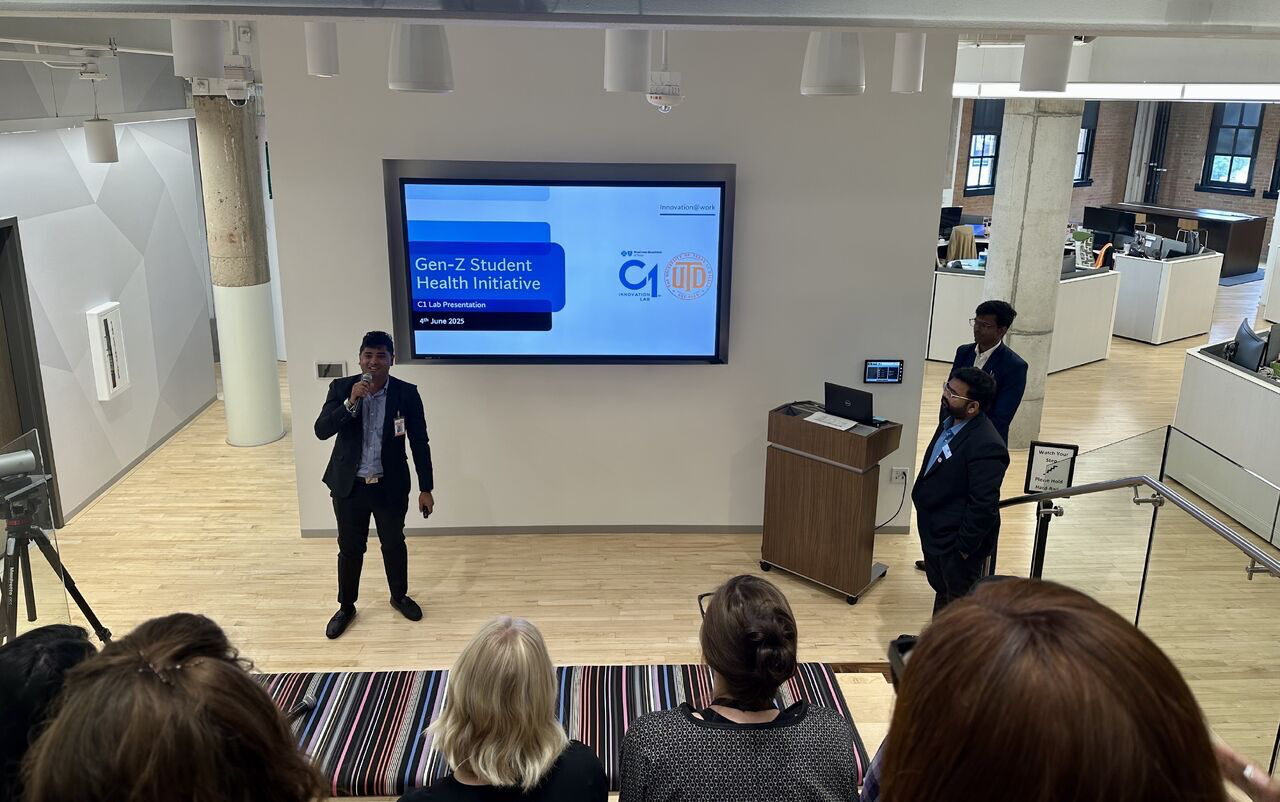
6.2 Stakeholder confidence.
IMAGE
Impact beyond the presentation.
The prototype secured buy-in from senior leadership for further research. The viability-driven approach was cited as the key differentiator from other teams.

Leadership approved expanded scope for future implementation phases.

Future research areas were identified during the leadership feedback session — including expanded campus pilots, deeper wellness program integration, and AI chatbot testing phases.
RETROSPECTIVE
What I took away.
01
Define the problem first
Resisting “solution-jumping” was the single most valuable discipline. Rigorously interrogating the problem statement meant our solutions addressed the real barrier, not the symptom.
02
Leveraging constraints as fuel
Operating without internal BCBS data forced creative research methods — primary interviews, public reports, and competitor analysis — that ultimately produced stronger, independently validated findings.
03
Talk to users, not about them
Interviewing 36 students directly surfaced behavioral patterns — like phone anxiety and insurance literacy gaps — that no amount of secondary research could have revealed.
04
Viability earns trust
The reason we were the only team selected to present to leadership wasn’t creativity alone — it was that every proposal came with a clear ROI case, scalability assessment, and time-to-market estimate.
Next project: